
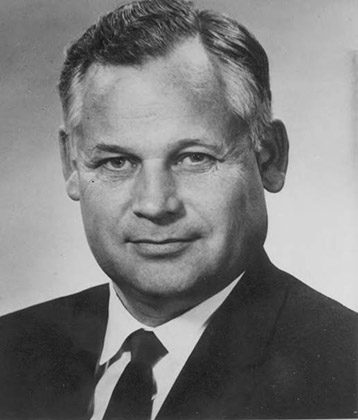
Lindal, Sir Walter
(1919 – 2011)
Based in Seattle, builder Sir Walter Lindal was the owner and founder of the largest prefabricated home construction company in the world – Lindal Cedar Homes. Founded in Canada, the initial pre-cut homes sold for $195 and Lindal designed and sold the houses himself. The business grew quickly, and, by 1948, he had opened his first independent dealer in Hamilton, Ontario. Within 20 years, the company would have a worldwide network of over 300 distributors and 29 company-owned display villages. Sales at the company exceeded $11 million dollars by 1972 and then reached over $14 million by 1987.
While friends and associates called him Walter, his birth name was Skuli Walter Lindal. When his U.S. citizenship papers were being completed in 1972, Lindal was asked if he wanted to retain his given Icelandic name and he reportedly replied, “Just make it Sir.”
Born in Saskatchewan, Canada on January 31, 1919, Lindal was raised by his widowed father, who struggled financially. During the war years the young Lindal served in the Canadian Army Corps of Engineers and became interested in prefabricated housing. At the age of 26 he established his first precut home business in Toronto in 1945. By 1968 his company was producing 73 pre-cut homes a month, utilizing 1.5 million board feet of lumber. And by 1999 the company had grown to 180 showroom dealers throughout the United States.
Seeking to be closer to timber sources, Lindal relocated the company to Vancouver, British Columbia, in 1962. Two years later he decided to tap into the U.S. market and opened a factory and warehouse in Bellingham. After acquiring the Tacoma-based Loxide Company in 1965, he moved the company headquarters to the city. However, wanting a more highly visible corporate campus, he decided to move the corporate offices again, this time to a site just south of downtown Seattle in 1972. Adjacent and visible from I-5, the new two-story, 12,000 sq. ft. office featured a folded plate roof. The open-air display village, constructed in a park-like setting, would showcase four of their models, just a portion of their portfolio of over 80 designs.
Among the most popular designs were their A-Frame series which came in 21’ and 26’ modules. Developed in 1965, Lindal had patented a low-cost A-frame system that would quickly help the company become a leader in this segment. The design eliminated the need for a series of rafters and instead utilized heavy plank sheathing to connect large purlins. This allowed wood shingles to be directly applied to the roof system, hence saving materials, labor, and costs. The A-frame design thrived until it was discontinued in 1982.
Always seeking to expand, Lindal opened factories throughout the United States and Canada, but also tapped other markets. He opened facilities in Britain (1962), Japan (1970), Australia (1971), Saudi Arabia, and Tahiti. In 1972 Lindal established a European headquarters in Zurich, Switzerland. With plants in four countries and sales outlets across the globe, Lindal was voted “World Trade Man of the Year” in 1968.
In 1971, Lindal Cedar became a public company and was traded on the New York Stock Exchange until March 2001. At that time, through a variety of transactions, the family regained control of the business and today it operates as a third-generation, family-owned private company.
Helping their expansion was the acquisition of a main competitor in 1983, Justus Cedar Homes, Inc. Established by Hungarian craftsman and businessman George R. Justus in 1954, the Justus name continued as a separate line of Lindal Cedar homes until the late 1980s.
Lindal Cedar Homes relied on traditional post-and-beam construction while using architectural-grade glulam posts and beams. These were patented under the trade name “Steelam.” Their standard models offered no insulation, while upgraded versions could be ordered with outside wall insulation. All homes had kiln-dried cedar structural components and were pre-cut to exact lengths with parts numbered at the factory. Assembly of the components took place on the building site, rather than in a factory setting.
Initially their cabins were marketed for the “Do-it-Yourself” market, but the increasing complexity of building codes often required a skilled contractor to build a Lindal home. The homes were sold as shells and did not include finished interiors, plumbing, kitchen cabinets, foundations, or trucking charges. However, the kits did include windows, nails, locks, and hinges. While Lindal offered a deep set of standardized plans, designs could easily add on different components of other models because most plans were designed using a similar grid system with 5’-4” modules. Also, the homes could be completely customized by the Lindal in-house architectural team.
Lindal passed away in Seattle at the age of 92 on September 15, 2011. He is buried at the Washington Memorial Park in SeaTac. His headstone bears an etching of one of his iconic model homes.
– Michael C Houser
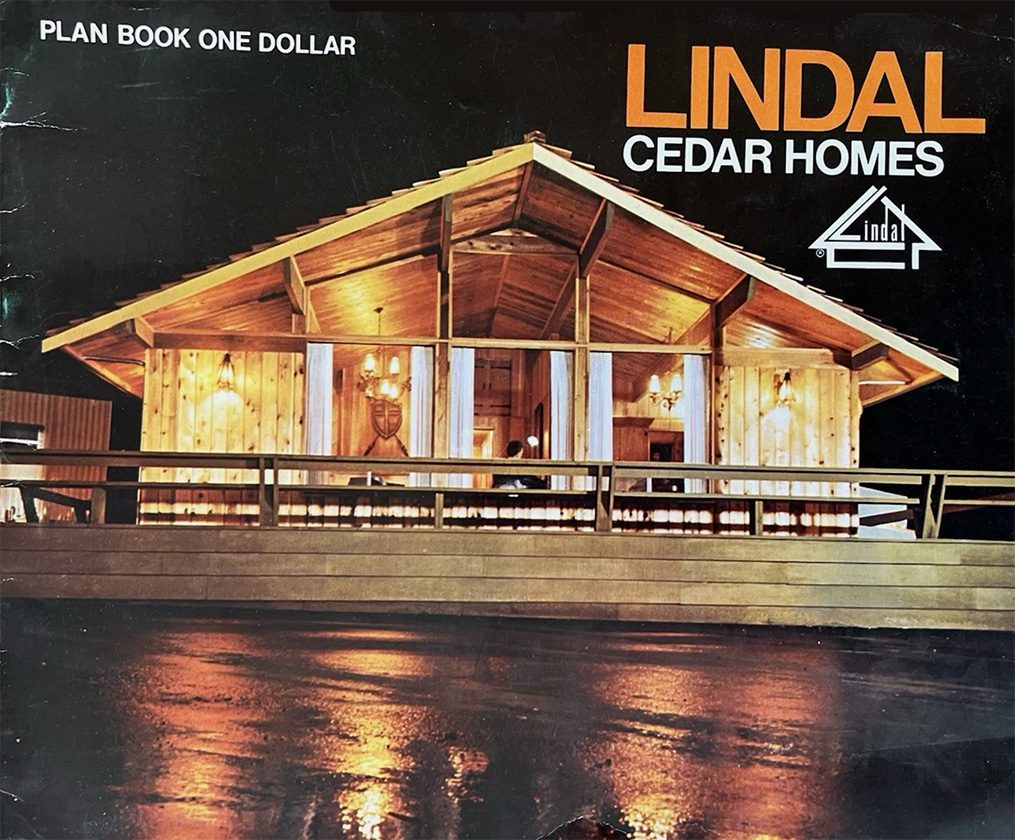
Lindal Cedar Homes Plan Book
Lindal Cedar Homes Plan Book | 1968
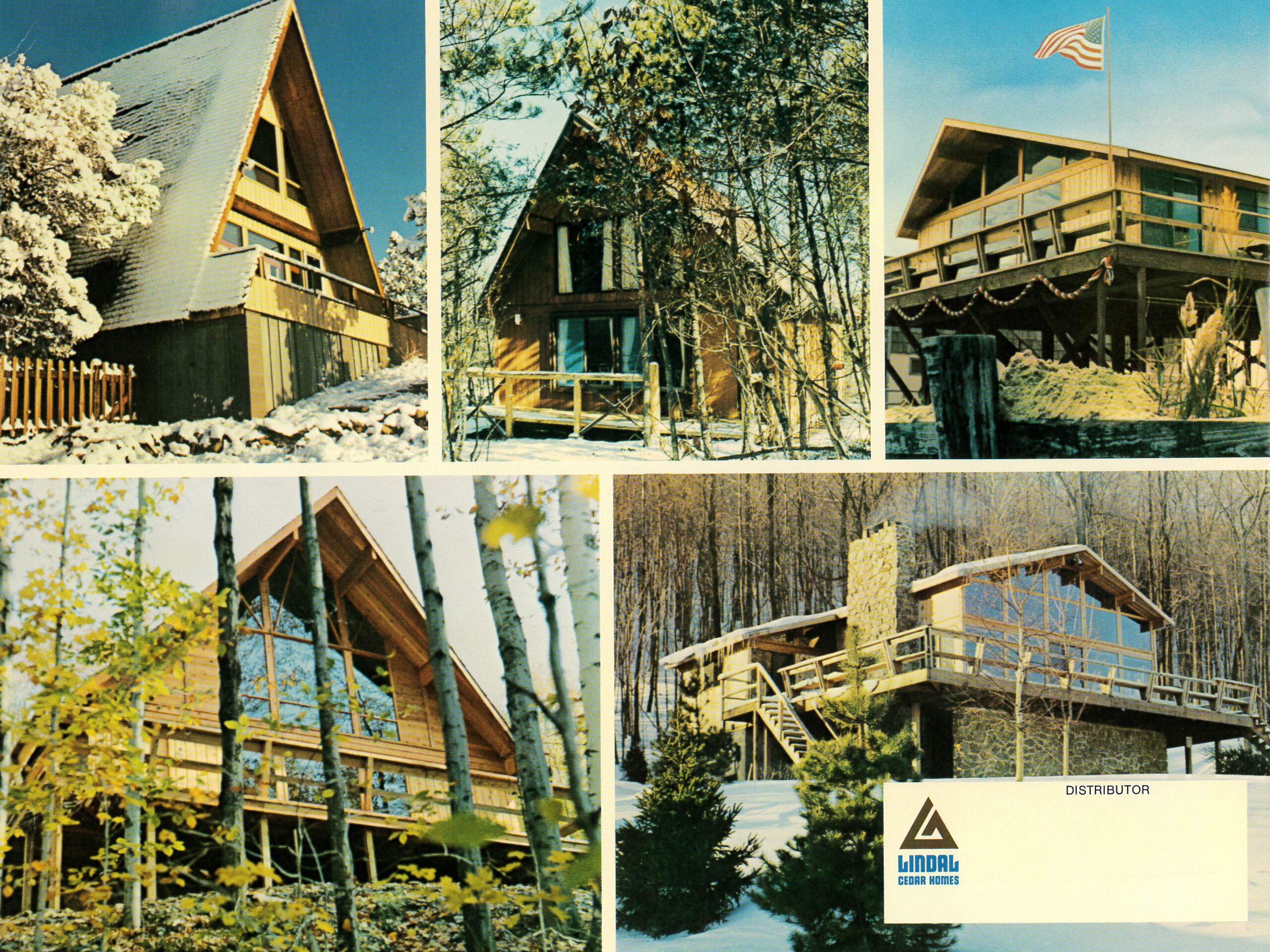
Lindal Cedar Homes Plan Book
Lindal Cedar Homes Plan Book – Back cover | 1967

Advertisement Lindal Cedar Homes
Source: Tacoma News Tribune – November 19, 1967
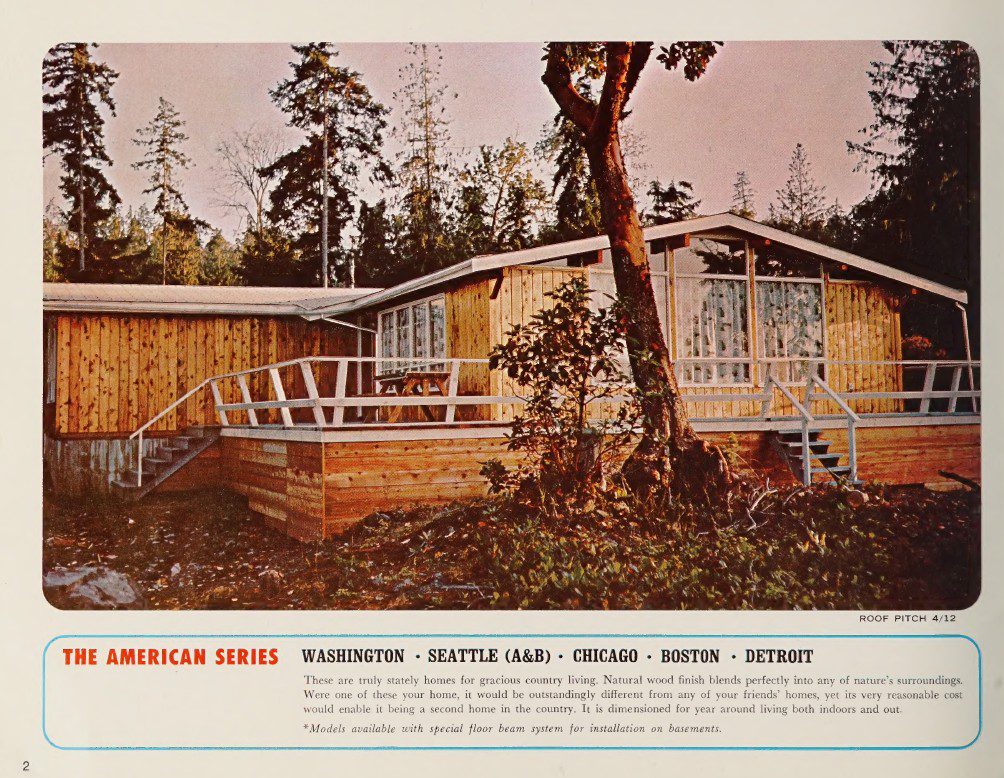
Lindal Cedar Homes Plan Book
Lindal Cedar Homes Plan Book – American Series | 1967
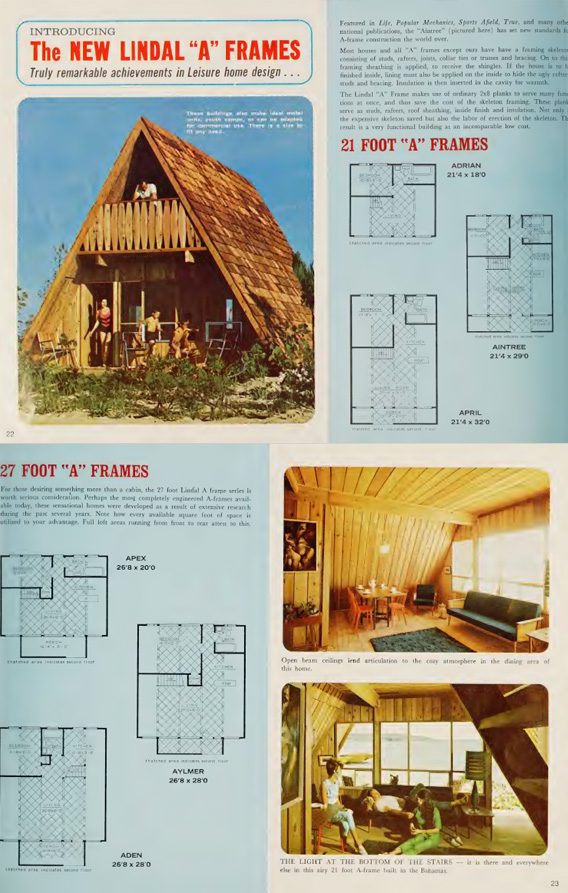
Lindal Cedar Homes Plan Book
Lindal Cedar Homes Plan Book – A Frame Series | 1967
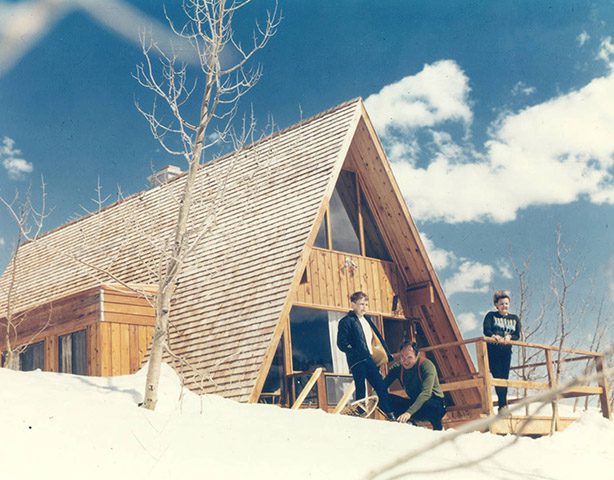
A Frame | Lindal Cedar Homes
Built: c 1969 | Source: Tacoma Public Library
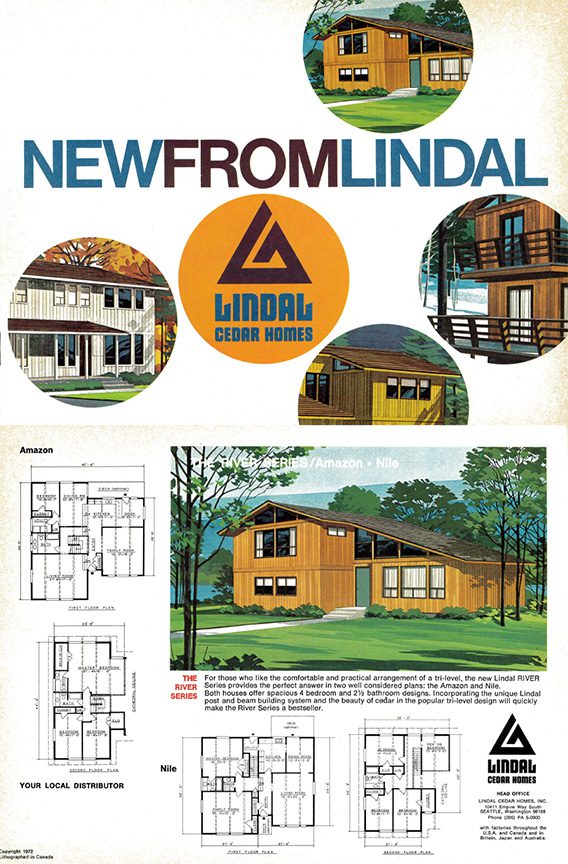
Lindal Cedar Homes Plan Book
Lindal Cedar Homes Plan Book cover and cut sheet for “Amazon” model | 1972

Advertisement Lindal Cedar Homes
Source: Seattle Times – May 25, 1969
Sir Walter Lindal
Source: Tacoma Public Library
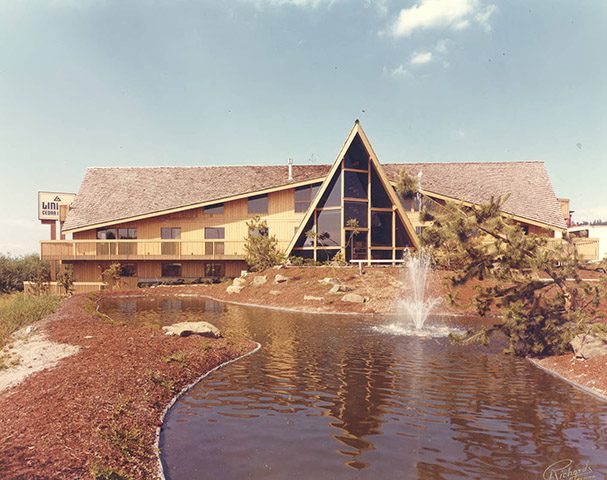
World Headquarters – Lindal Cedar Homes | Seattle
Built: 1972 | Source: Tacoma Public Library

Lindal Cedar Homes Plan Book
Lindal Cedar Homes Plan Book | 1967
